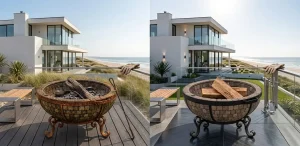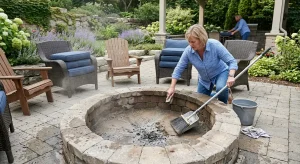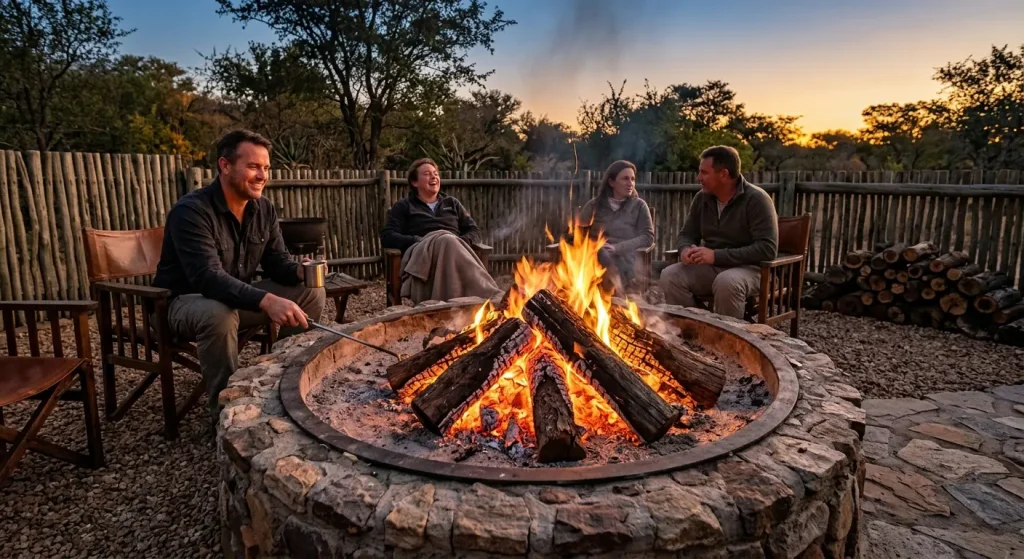
There’s nothing quite like sitting around a boma once the sun’s gone down, but anyone who’s fed the wrong logs into a fire pit knows how quickly a good evening can turn into a smoky, coughing mess.
Choosing the right firewood makes a real difference. Good wood burns hotter, lasts longer, produces cleaner coals and doesn’t leave everyone squinting through a haze of smoke.
Wet or unsuitable wood, on the other hand, tends to hiss, smoke and need constant attention just to stay alight. If you’ve ever wondered what the best wood for a boma fire actually is, this guide should clear it up.
Why Does Fire Pit Wood Type Matter?
Not all firewood behaves the same way once it hits the flames. Different species vary enormously in density, and that density affects almost everything about how the fire performs.
Denser woods tend to burn slower and produce more consistent heat over a longer period, while softer, lighter woods catch quickly but burn out just as fast. There’s also a difference between wood chosen for a general warming fire, where you mostly want steady flames and pleasant heat, and wood chosen specifically for braaiing, where the goal is a solid bed of hot, long-lasting coals.
Smoke output matters too. Some types of wood for a boma fire pit produce thick smoke almost regardless of how dry they are, while others burn comparatively clean. Getting this right from the start saves a lot of frustration later on.
What Makes Good Wood for a Boma Fire Pit?
There are a handful of qualities worth looking for when you’re picking out good firewood for a boma fire pit. The wood should be well seasoned and properly dry, ideally a dense hardwood rather than a soft, quick-burning species.
You want decent heat output, a long burn time and relatively low smoke, along with the ability to break down into useful, glowing coals rather than just ash. It should also be suitable for outdoor use generally, without any chemical treatment or contamination.
Moisture content is arguably the single biggest factor. Freshly cut or “green” wood can hold well over 50% moisture, and burning it is an uphill battle. Properly seasoned firewood should sit at around 20% moisture or less. At that point, the wood catches more easily, burns hotter and produces far less smoke, which is really what separates the best wood for a fire pit from the wood that just sits there smouldering.
What Is the Best Wood for a Boma Fire Pit in South Africa?
If you’re after a straightforward answer, kameeldoring is generally regarded as the premium choice. It’s a dense hardwood that burns slowly, throws out serious heat and leaves behind hot, long-lasting coals, which makes it ideal for evenings where you plan to sit around the boma for hours rather than minutes.
Firewood suppliers across the country consistently describe it as one of the best options going, and once you’ve used it, it’s easy to see why.
That said, kameeldoring isn’t the only decent option out there. Rooikrans is widely available and burns well, producing good heat with a reasonably long burn time, which is part of why it’s such a popular choice for braai wood.
Sekelbos is another solid option, often praised for its flame and coal quality. Blue gum burns hot and fast, making it a good choice if you want flames going quickly, though it doesn’t always last as long as denser hardwoods. Black wattle is easy to source and burns reasonably well, though it tends to sit a notch below the others in terms of heat and burn time.
Ultimately, the best firewood for a boma depends on what you’re actually after. If longevity and heat are the priority, kameeldoring is hard to beat. If you want good flames with less concern about an all-night burn, rooikrans or blue gum will do the job nicely.
Kameeldoring vs Rooikrans vs Blue Gum: Which Is Best?
A direct comparison helps put things into perspective.
| Wood | Heat | Burn Time | Flame | Smoke | Coals | Best Use |
|---|---|---|---|---|---|---|
| Kameeldoring | Very high | Long | Moderate | Low | Excellent | Long evenings, braaiing |
| Rooikrans | High | Moderate to long | Good | Low to moderate | Good | General braai wood |
| Blue Gum | High | Shorter | Strong, quick | Moderate | Fair | Getting a fire going fast |
If you’re specifically after the best braai wood, kameeldoring and rooikrans tend to come out on top thanks to their coal quality. If you just want a lively fire to sit around without necessarily cooking on it, blue gum or sekelbos can work just as well.
Why Dry, Seasoned Firewood Is So Important
The difference between green wood and properly seasoned wood comes down to energy. Green wood is full of moisture, and before it can burn properly, that moisture has to evaporate. This uses up a huge amount of the available heat, which is why wet wood hisses, smokes heavily and struggles to catch.
Seasoned wood, having already lost most of that moisture, converts far more of its energy directly into heat and flame. As a rough guide, firewood at around 20% moisture or below burns significantly better than anything wetter.
Storage plays a big role in getting wood to this point and keeping it there. Firewood should be kept off the ground, ideally on a rack or pallet, with good airflow around the stack. Covering the top while leaving the sides open helps keep rain out without trapping moisture inside the pile.
What Wood Should You Avoid in a Boma Fire Pit?
Some types of wood simply shouldn’t go anywhere near a boma fire. Green or freshly cut wood is an obvious one, as is anything still wet from rain or damp storage.
Painted or treated timber is worth avoiding entirely, since burning it can release harmful fumes, and the same goes for construction offcuts, which often contain glue, varnish or other chemical residues.
Basically, if there’s any doubt about what’s in the wood or how it’s been treated, it’s not worth the risk, particularly when you’re cooking over it or sitting close by for hours.
How Much Wood Do You Need for a Boma Fire?
This depends largely on the size of your boma and how long you plan to keep the fire going.
A small gathering of a few people for a couple of hours might only need a modest stack, whereas a large group settling in for an entire evening will get through considerably more. As a general rule, it’s better to start with less wood than you think you’ll need and build up from there, rather than piling the boma full from the outset.
Starting smaller also gives you more control. A fire that begins with kindling and smaller pieces establishes properly before larger logs go on, which tends to produce a steadier, longer-lasting fire overall than one that’s overloaded from the first match.
How to Build a Better Fire in Your Boma
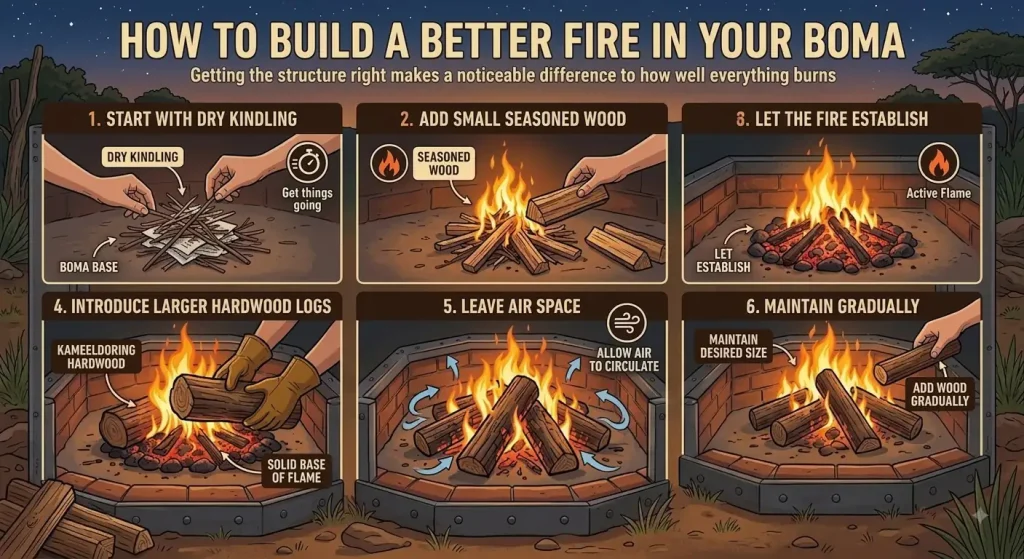
Getting the structure right makes a noticeable difference to how well everything burns.
- Start with dry kindling to get things going.
- Add smaller pieces of seasoned wood once the kindling catches.
- Let the fire establish properly before adding anything larger.
- Introduce your larger hardwood logs, such as kameeldoring, once there’s a solid base of flame.
- Leave enough space between logs for air to circulate.
- Add wood gradually from there to maintain the fire at the size you want.
This approach avoids smothering a young fire with oversized logs, which is one of the most common reasons boma fires end up smoky and difficult to manage.
The Best Wood Depends on How You Use Your Boma
Different occasions call for slightly different priorities. For warmth on a cold evening, dense hardwood that burns for a long time, such as kameeldoring, is the obvious choice.
For atmosphere, where the aim is good flames without choking everyone in smoke, something like blue gum or sekelbos works well. For braaiing, the priority shifts to wood that produces hot, long-lasting coals, which again points back towards kameeldoring or rooikrans.
If you’re planning an all-night fire, dense, slow-burning hardwood is really the only sensible option, since it will still be producing heat long after lighter woods have burned out.
Final Verdict: What Wood Should You Use?
For a boma fire pit, the safest recommendation is well-seasoned, dry hardwood, and kameeldoring stands out as the strongest premium option when long-lasting heat and good coals are what you’re after.
Alternatives like rooikrans, sekelbos and blue gum all have their place depending on whether you’re prioritising flame, speed or convenience. What matters just as much as the species, though, is how dry and properly seasoned the wood actually is.
Even the best wood for a boma fire will disappoint if it hasn’t been dried out properly, so checking for good seasoning is just as important as choosing the right type in the first place.